

In the fast-paced world of industrial automation, obsolescence is a constant challenge. As equipment ages, businesses are often forced into costly upgrades or complete overhauls to maintain their operations. But what happens when the core of your system—a critical 8-bit PLC—becomes unreadable, and there’s no software backup? This was the daunting scenario we faced recently.
In this case, while the Variable Speed Drive (VSD) was still fully operational, the legacy 8-bit Programmable Logic Controller (PLC) had reached the end of its useful life, with no option to simply recover the original software. What followed was a complex process of reverse engineering and rewriting the software from scratch, giving new life to the system. What made this even more impactful was that the new PLC we implemented allowed for integration with hardware from multiple manufacturers—something almost unheard of in our highly specialized industry.
Here’s how we turned an obsolete system into a modern, adaptable solution that not only restored functionality but also introduced significant new capabilities.
The Challenge: Facing an Unreadable 8-Bit PLC
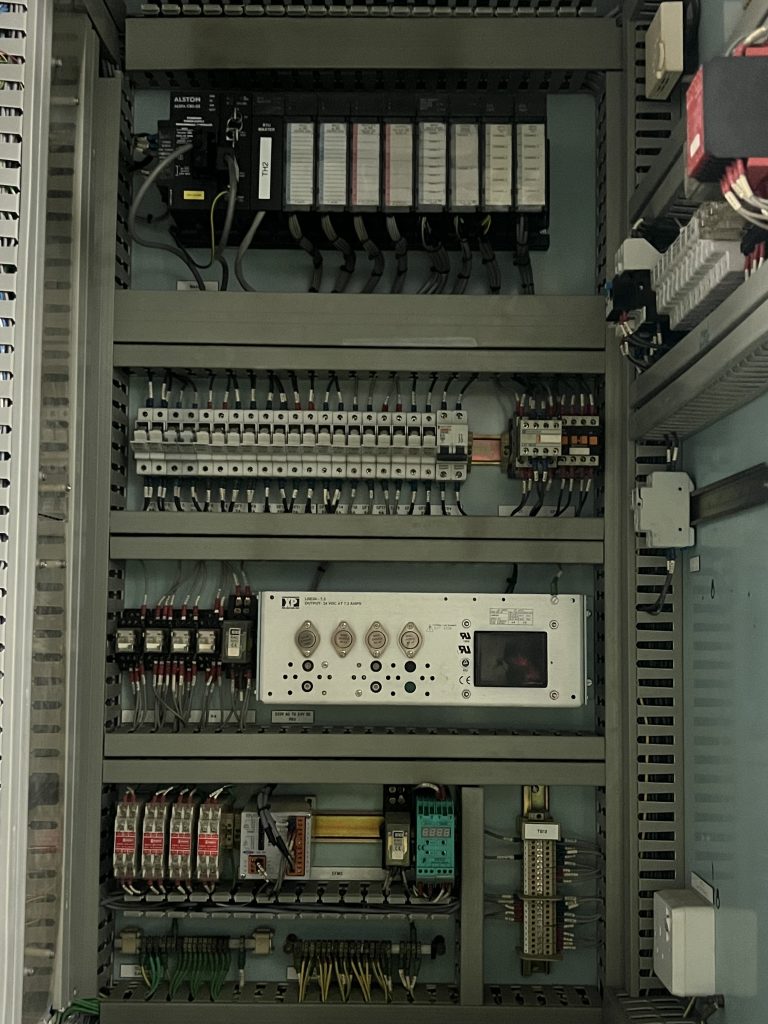
Our PLC had been in service for decades, controlling key processes alongside the VSD. While the drive continued to perform reliably, the aging 8-bit PLC was no longer readable, and no one had kept a software backup or documentation of its programming. Without access to the original code or a way to simply transfer the existing functionality to a modern controller, we found ourselves facing what looked like an unsolvable problem.
The usual approach would have been to replace the entire system—a costly, time-consuming process. But because the VSD and other hardware were still in good working condition, it made little sense to replace everything. We needed a way to bring the outdated PLC back to life, and the only way forward was through reverse engineering.
Reverse Engineering: Rebuilding the Logic from Scratch
Without the original software, our team had to get creative. The process of reverse engineering an 8-bit PLC involved carefully analyzing how the system worked in its last functional state.
Our approach involved three key steps:
- System Analysis: First, we observed how the system responded to various inputs, tracking the actions triggered by the PLC. This included monitoring the I/O signals between the PLC, sensors, actuators, and the VSD to understand the control logic behind each function.
- Signal Tracing: Using diagnostic tools, we traced signals from the old PLC to identify the sequences that triggered different operations. By understanding the timing and structure of these signals, we could start to piece together the logic of the original program.
- Control Logic Deconstruction: Finally, we reverse-engineered the logic that controlled the system. This meant breaking down the old processes into simpler tasks, reconstructing the decision-making logic, and mapping it to new, more efficient code.
This deep dive into the system allowed us to rebuild the software from scratch, writing new code that replicated the old functions but optimized for a modern PLC.

Rewriting the Software: A Fresh Start
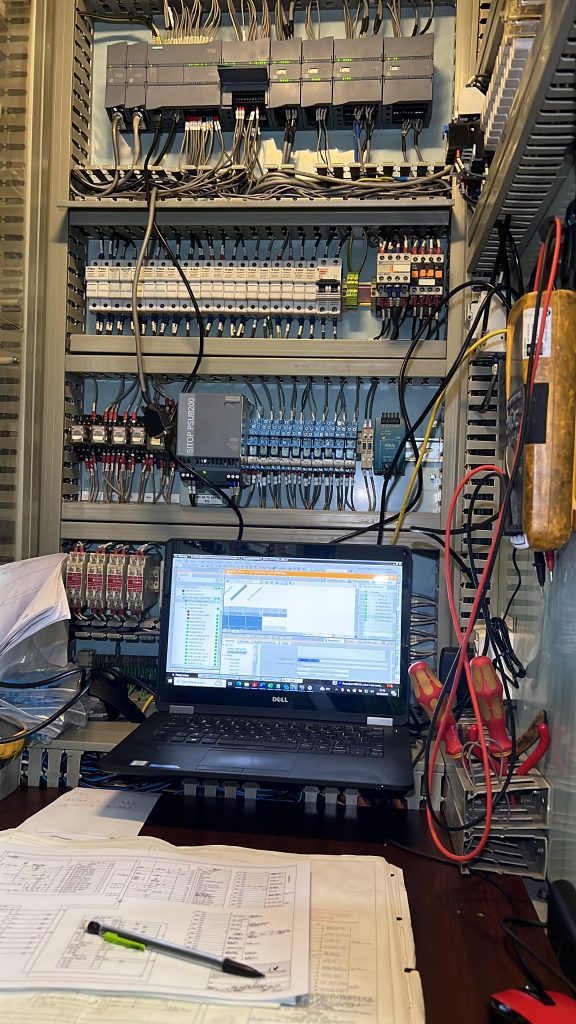
Once we had a clear understanding of how the old PLC operated, we moved on to writing the new control software. This wasn’t just about recreating the past; it was about enhancing the system for the future.
Key improvements included:
- Modern Programming Practices: We utilized the latest PLC programming standards, making the new system faster, more efficient, and easier to troubleshoot.
- Scalable and Modular Code: Instead of hard-coding everything into one monolithic program, we broke the system’s logic into modular blocks. This allowed for easier updates and flexibility in case future changes were needed.
- Optimized System Performance: By rewriting the code with modern architectures in mind, we were able to reduce latency, streamline processes, and improve overall system performance.
But perhaps the most important innovation was the introduction of cross-vendor compatibility.
Breaking Industry Norms: Multi-Manufacturer Hardware Integration
Traditionally, PLCs and the hardware they control come from the same manufacturer, locking you into a specific ecosystem. This proprietary approach limits flexibility and often leads to high costs when parts need replacement or upgrading.
However, we saw an opportunity to change the game.
In designing the new PLC system, we incorporated an open architecture that allowed the controller to communicate with hardware from multiple manufacturers, including the old VSD. We achieved this by abstracting the hardware interface layers in the software, meaning that the new PLC could be programmed to interact with components from different vendors seamlessly.
This level of cross-compatibility is rare in the industrial automation industry, where vendor lock-in is standard. By enabling the system to use hardware from different sources, we provided:
- More Flexibility: We could now source components from a variety of manufacturers, allowing us to choose the best part for each task rather than being limited to a single vendor’s product line.
- Cost Savings: With multiple hardware options, we could select more cost-effective solutions without sacrificing performance or reliability.
- Future-Proofing: Should we need to replace or upgrade components in the future, we’re no longer tied to one manufacturer’s offerings. This significantly reduces the risk of future obsolescence.
The Result: A Future-Proof, Cross-Compatible System
Our hard work paid off. Not only did we restore full functionality to the system, but we also made it more powerful, flexible, and cost-efficient than it had ever been.
Here’s what we achieved:
- Restored Control: The new PLC system fully restored control functions, working seamlessly with the old VSD, which was still performing well.
- Cross-Vendor Compatibility: We broke away from the industry standard of vendor lock-in, allowing for a much wider range of hardware integration in the future.
- Improved Performance: The new software made the system more responsive and reliable, with modern programming methods ensuring smooth operation.
- Cost-Efficiency: By keeping the old VSD and introducing the ability to use components from various manufacturers, we significantly reduced the overall cost of the project.
Lessons Learned: Turning Obsolescence into Opportunity
This project reinforced an important lesson: obsolescence doesn’t have to be the end. It can be a chance to innovate, rethink, and improve. Here are some takeaways from our experience:
- Be Proactive with Backups: Always maintain backups and documentation to avoid scrambling for solutions when equipment becomes unreadable.
- Reverse Engineering is a Powerful Tool: Even when original code is lost, reverse engineering can restore functionality and allow for creative new solutions.
- Challenge the Status Quo: By breaking free of traditional vendor constraints, you can open up new possibilities for cost savings, flexibility, and future-proofing.
By reverse engineering and rewriting the software for our obsolete 8-bit PLC, we transformed what could have been a costly equipment replacement into a modern, adaptable solution. With cross-vendor hardware compatibility, we’re not only operating more efficiently but also paving the way for a more flexible and future-ready automation system.